7 Mistakes You're Making with Squat Lower Back Pain (and How to Fix Them)
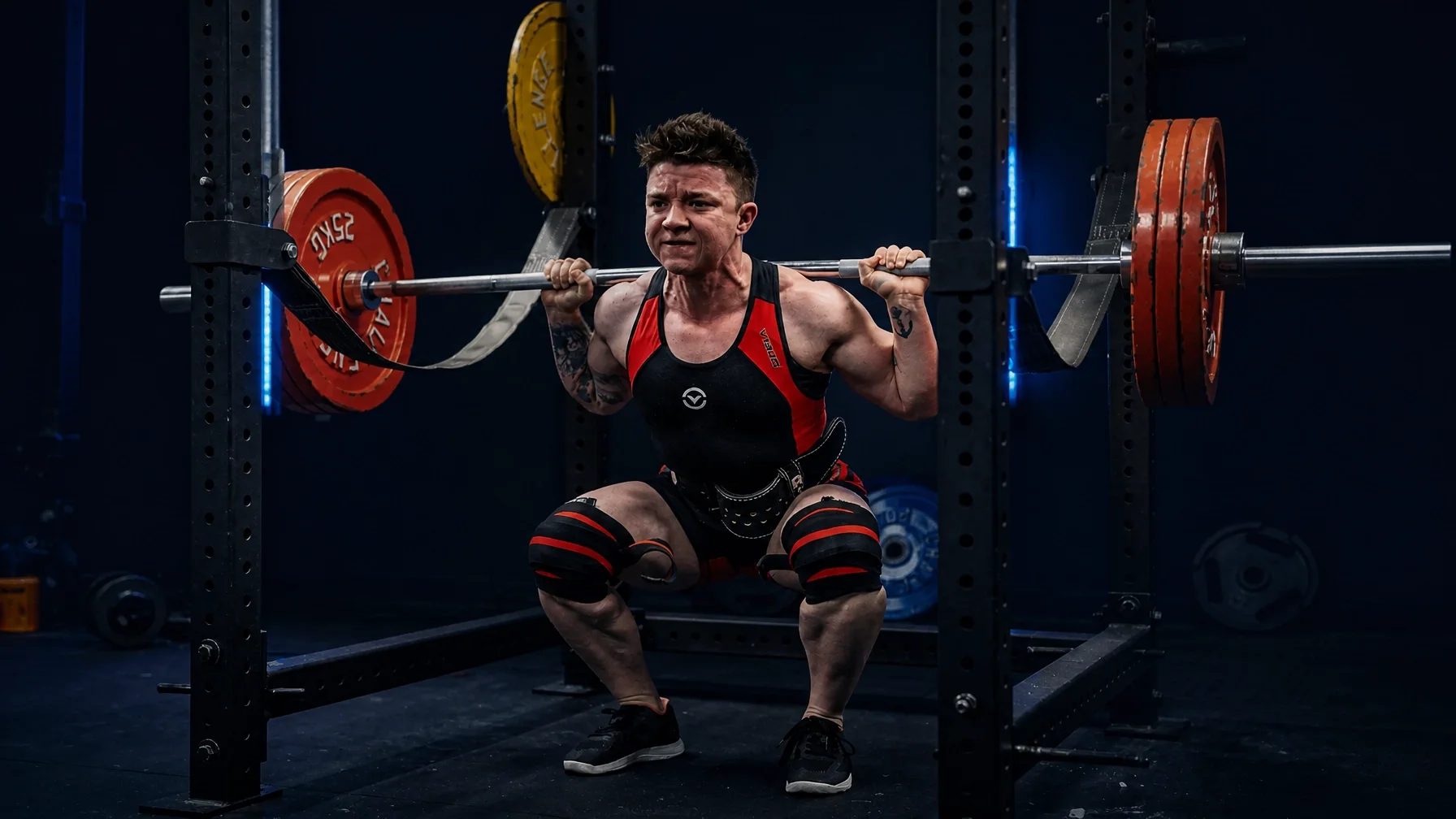
You’re mid-set, the bar feels like a house, and halfway out of the hole, you feel that familiar, sharp "tweak" in your lower back. You rack the bar, take a breath, and tell yourself you just need to "brace harder." But the next set is worse.
Most lifters treat lower back pain like a freak accident or a sign they need a month of bed rest. It’s neither. Lower back pain in the squat is usually a technical threshold problem: your current mechanics are writing checks your back can’t cash.
If you’re tired of "taking a week off" only for the pain to return the second you hit 80%, you’re likely making one of these seven mistakes. Stop guessing and start fixing the root cause.
01 IGNORING THE HIP SHIFT
The most common driver of squat-related back pain isn't just "weak abs": it’s a Hip Shift. If your hips drift to one side or rotate as you ascend, you are unevenly loading your lumbar spine and SI joint. You are essentially turning every squat into a heavy, accidental diagonal lift.
In my practice at PhysioParth, I categorize hip shifts into six root causes:
Hip Mobility Restriction: You feel "stuck" in one hip at depth.
Glute Weakness: Your hips shift away from the dominant leg as the set progresses.
Ankle Restriction: One heel rises at the bottom, forcing the hips to compensate.
Stance Mismatch: Your stance doesn't match your individual anatomy.
Lateral Pelvic Tilt: One hip sits higher even at rest.
Pain Inhibition: You are reflexively shifting away from a pre-existing "hot" spot.
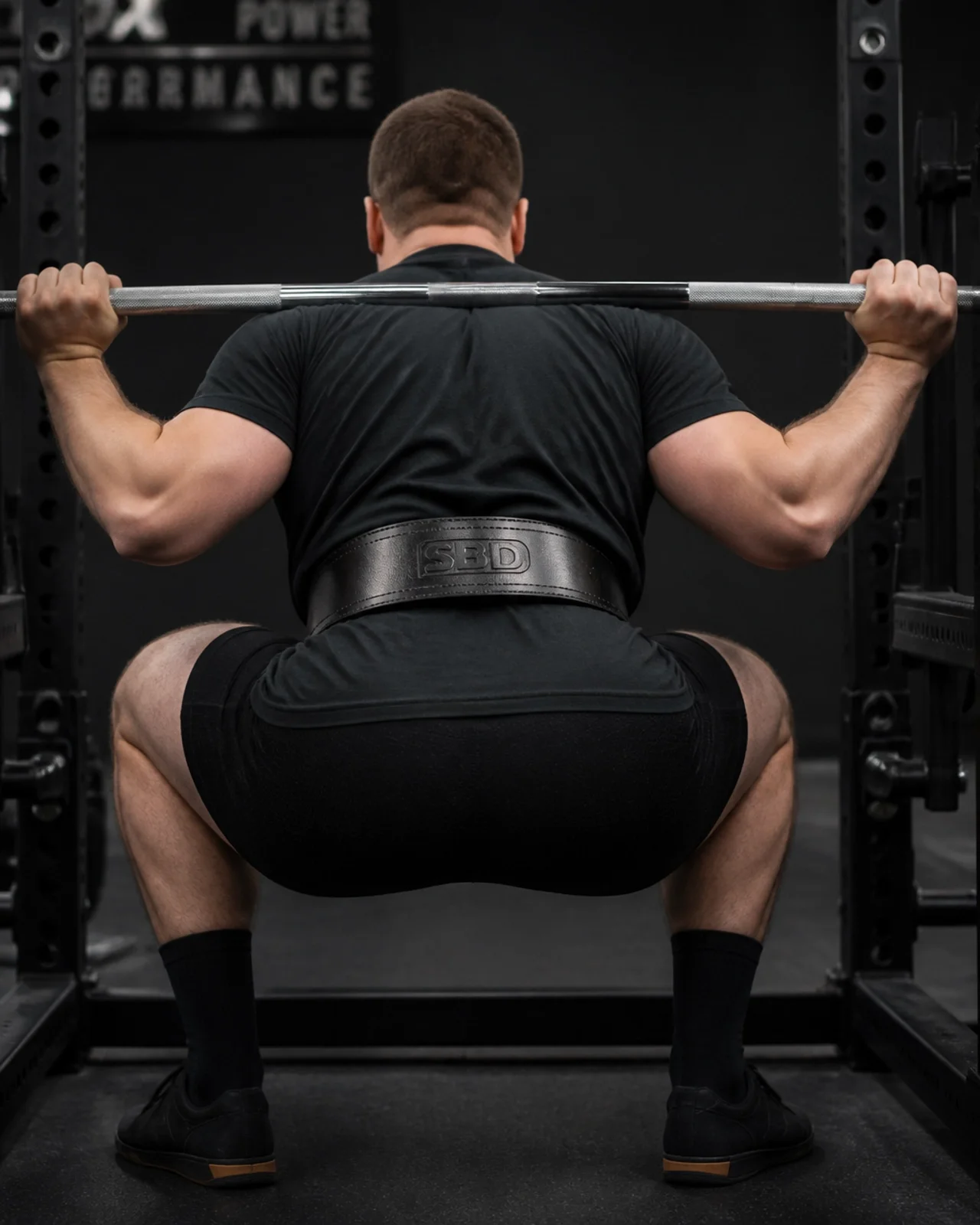
THE FIX: Identify the driver. If the shift reduces immediately when you put a small plate under your heels, it’s an ankle restriction. If it only happens when the weight gets heavy, it’s likely weakness or pain inhibition. Identify the "why" before you try the "how."
02 TRYING TO "CUE" THROUGH A STRUCTURAL PROBLEM
"Knees out! Chest up!": these are great cues, but they are useless if you have a structural or mobility deficit. You cannot "cue" your way out of a joint that physically cannot move into the required range.
If your ankle is locked up like a bank vault, no amount of "knees out" will stop your torso from dumping forward and loading your lower back. When you try to force a position your body can’t reach, you create compensatory shear: and that’s exactly where the "tweak" happens.
THE FIX: Stop shouting cues at yourself. If you can’t hit a position with an empty bar, you won’t hit it with 400 lbs. Address the mobility (90/90 stretches, ankle mobs) or adjust the equipment (heel wedges) instead of just trying to "try harder."
03 CHANGING FIVE THINGS IN ONE SESSION
I see this every week: a lifter gets a back flare-up and immediately changes their stance width, their bar position, their shoes, and their bracing style all in the same workout.
If you change everything at once, you’ve learned nothing. You won't know if the wider stance fixed the pain or if the high-bar position caused a new issue. Stacking interventions makes it impossible to track progress.
THE FIX: Apply the Rule of One. Change one variable: and only one: for 3-4 weeks. This gives your nervous system time to adapt and gives us clean data on what actually works for your back.
04 POOR FILMING AND ANALYSIS HABITS
"It felt like I was straight up and down" is the biggest lie in powerlifting. Your "feel" is often a terrible indicator of your "real." Most lifters film from the side to see depth, but the side view hides the hip shifts and rotations that are actually killing your back.
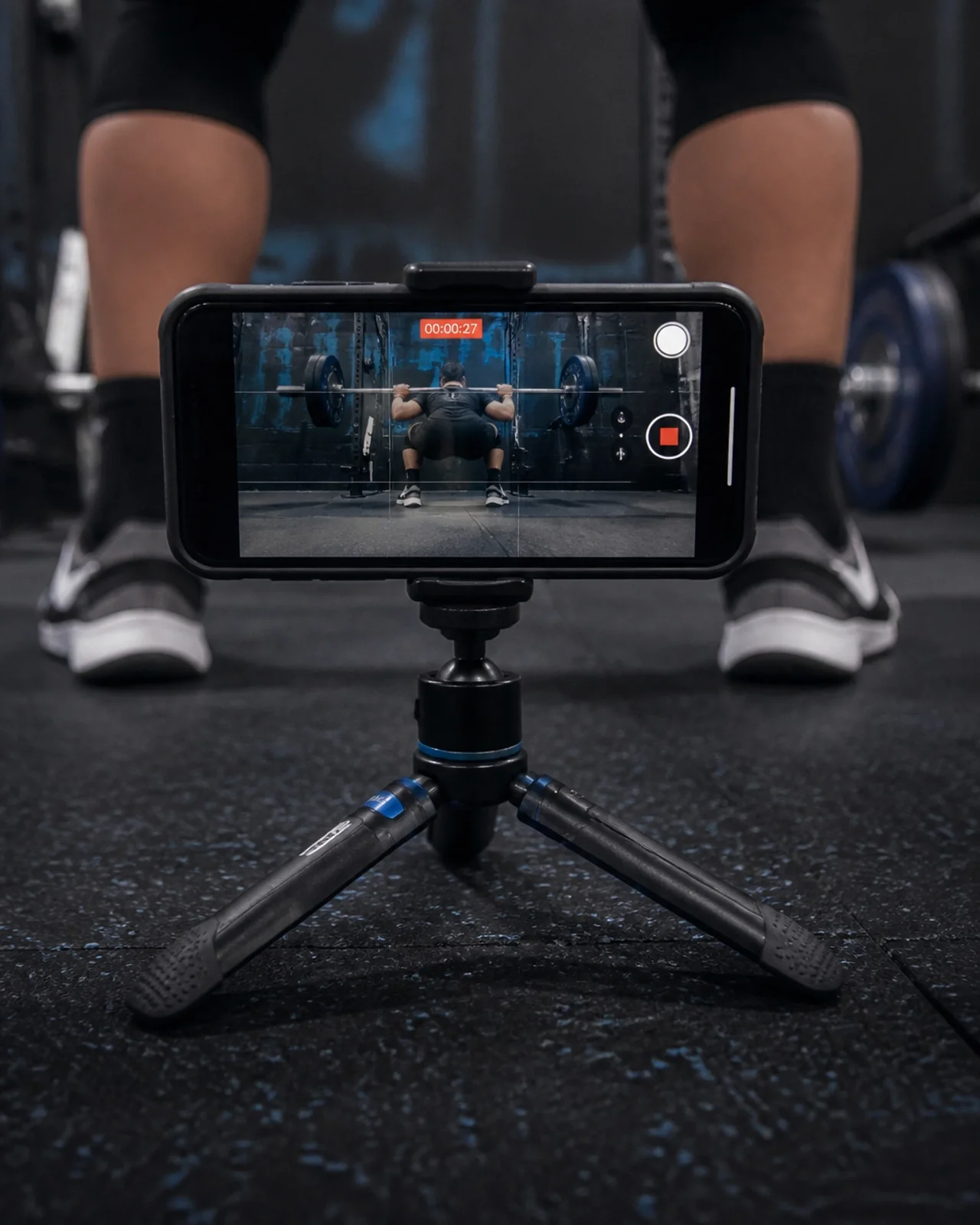
THE FIX: Follow my Filming Rule. Set your phone at heel height, directly behind you. This is the only way to see lateral shifts and pelvic tilts. Watch your sets in slow-motion. If you aren't looking at your movement at 0.5x speed, you’re missing the micro-shifts that occur the millisecond you transition from the descent to the ascent.
05 THE "REST IS BEST" MYTH (STOPPING ALL TRAINING)
The biggest mistake you can make with a back injury is stopping all training and sitting on the couch for two weeks. Complete rest leads to deconditioning and fear-avoidance: which makes the pain more likely to become chronic.
At PhysioParth, our philosophy is that you should almost never stop training. We simply need to find your entry point: the load and range of motion that you can perform without aggravating the symptoms.
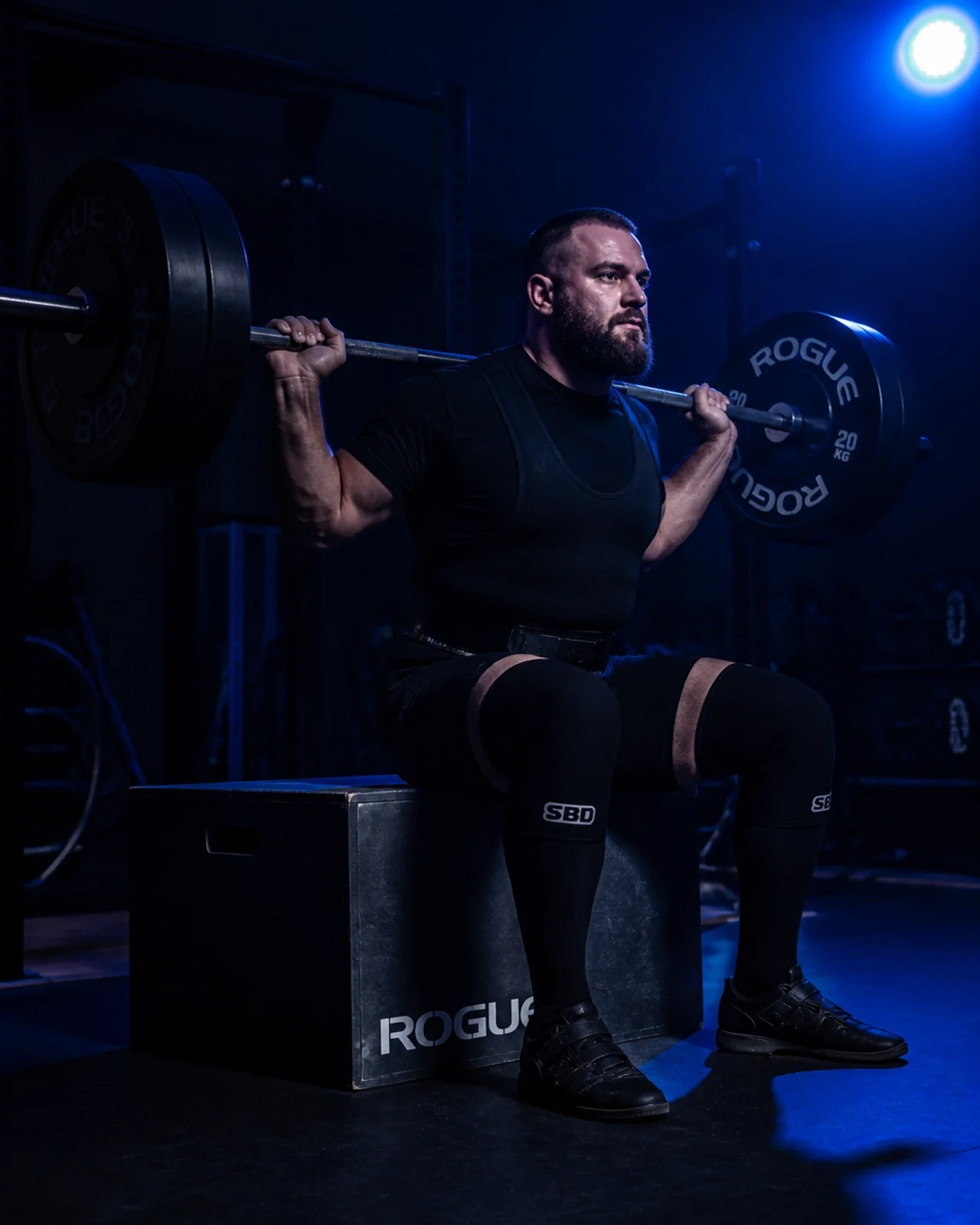
THE FIX: Use Graded Exposure. If back squats hurt, try box squats. If those hurt, try goblet squats. If those hurt, try belt squats to remove the axial load entirely. Keep the needle moving. Total rest is the enemy of a fast recovery.
06 MISMATCHED STANCE AND MOBILITY
There is no "perfect" squat stance: only the one that fits your hip sockets. If you are a "long-femur" lifter trying to squat with a narrow, toes-forward stance because you saw a world-record holder do it, you are inviting a Butt Wink (lumbar flexion).
When your femur hits the edge of the hip socket and can't go further, your pelvis has to tuck under to get you to depth. That tucking under load is a massive stressor for the intervertebral discs.
THE FIX: Experiment with stance. Try toeing out 5-10 degrees more on your "shift side." If your back feels 50% better just by widening your feet two inches, that’s not a weakness: that’s a biomechanical mismatch you just solved.
07 RELYING ON PASSIVE REHAB
Foam rolling, massage guns, and "popping" your back might feel good for ten minutes, but they do nothing to change your squat mechanics. They are "symptom-masking," not "problem-fixing."
If you spend 30 minutes rolling your lats but then go right back to a squat where your hips shoot back and your chest caves, you are wasting your time. Active rehab: strengthening the positions you are weak in: is the only way to stay on the platform.
THE FIX: Stop chasing "tightness." Tightness in the lower back is often a protective response to instability elsewhere. Build a more robust brace, fix your hip shift, and the "tightness" will disappear on its own.
STOP GUESSING. START FIXING.
Lower back pain doesn't have to be the end of your prep. It’s just data. It’s your body telling you that your current technique or load management is unsustainable.
If you’re ready to stop the "rest and repeat" cycle and actually understand why your back is flaring up, you need a plan.
Want the same breakdown for your own lift? Get your free 5-Minute Lifter's Pain Audit →
This audit will help you determine if your pain is a technical fix, a programming error, or something that needs an immediate clinical assessment. Let’s get you back to the bar.